
Editing Techniques
Throughout the years, editing has gradually changed from a physical, painful process to an easy, painless process; Thankfully, I have never had to cut and stick reels of film together, these days it's all on a computer and always right at your fingertips.
 |
| This seems to be an audio splicer |
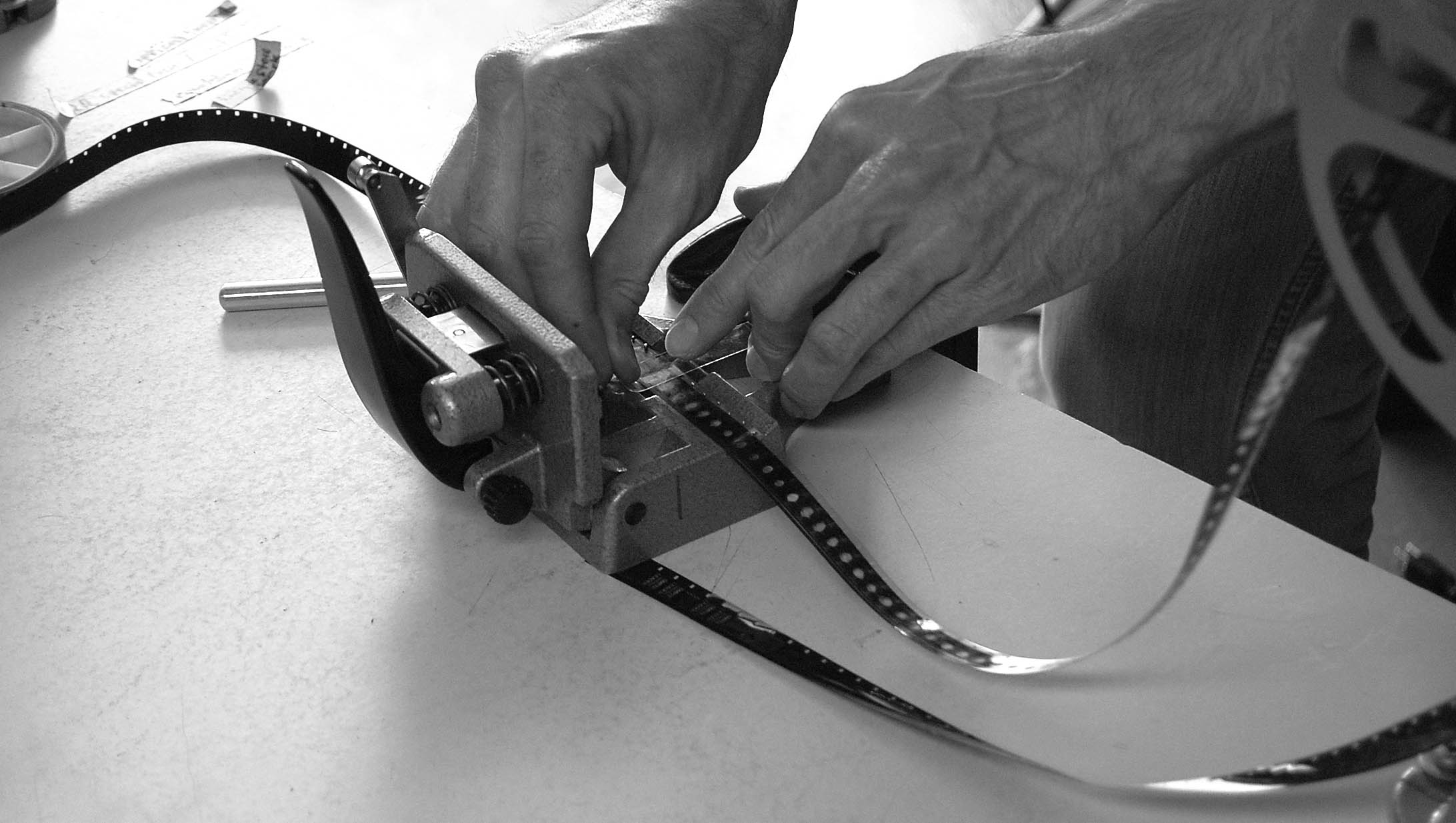 |
| This is a video splicer |
Most films still shoot on film and edit digitally, they can do this using a digitiser.
Are many shots that are commonly used in films and when making a film and using some shots more than others can have a desired effect.
As well as splicing and cutting, you can also do something known as 'In-Camera Editing' This is where you start and stop recording to produce cuts and transitions. Low budget film makers will make great use of this editing style.
Transitions in films can make all the difference to the scene, a wrongly placed transition can sometimes mess up the whole flow of the film.
That basic cut is a transition, along with dissolve, fade and wipe.
A dissolve is usually used to connote time shifts or going into memory sequences, whereas a fade is mostly used to show the passing of time.
Establishing shots are used to let the viewer know where everything is in relation to one another; this enables the viewer to learn the space and the time in which things happen.


Continuity
This is the first establishing shot of the episode and this is where most of the action takes place. You can really get to see the location and some recognisable features, such as the rocks or shrubs.

The 180 degree rule is used in film to keep the characters on the correct side of the screen so that the audience can easily follow a conversation between people; the rule can only be broken if the camera moves past the axis and doesn't cut across it.
This conversation perfectly demonstrates the 180 degree rule and the shot-reverse-shot.
Shot-reverse-shot is normally used in film to display both sides of a conversation. In this scene, Walter and Jack are having a heated debate and the shot reverse shot allows you to be fully immersed in the conversation.


Match cuts on action are where an action starts in one shot and ends in another, and example of this is someone putting their hand into their pocket. This helps the audience to understand that the action is continuous.
The above shot is a reaction shot to someone being killed and the shot to the left is the match on action and shows Walter falling to the floor. This shot is also motivated editing! The cut is motivated by the muffling of the music and the movement of the talent

Screen time is very important in moving image productions, the talent with the most screen time is generally considered the main character. This is important specifically in films as opposed to soaps.

Close-ups enable the audience to pick up on minor details that they wouldn't have necessarily picked up on had it been a further away shot.

This is a screenshot taken during a Dolly Zoom. The background appears to be ripped away from Walter as Hank Is shot dead.
A montage is designed to display a lot of activities in a short amount of time; there is a song that helps fully describe what a montage is.
Transitions are very important in moving image productions and Breaking Bad uses them very well.
There is a whole library of transitions we can use, let's look at some...
A simple cut: The purpose of this transition is to get from one piece of footage to another; It's a fairly boring transition but can be fun if you put it in the right place.
Dissolve: A dissolve is where 2 pieces of footage are run simultaneously and on fades out whilst the other fades in; This can also be called a 'Cross-Dissolve' and is most commonly used to show the passing of time or the change of location.
The time and space of a moving image production are extremely important for the audience. If nothing is explained, it could make it very difficult to understand where everything is or how much time something is taking. A film of 1-2 hours could contain the events of a thousand years, but thanks to Time and Space editing we can show the important events and still understand the whole story. Shots of the outside of a building, then the window and finally someone sitting at a desk implies that the person is in that building - this is an example of Time and Space of the story.
Ah, the fade: Fades are brilliant at ending stories; They are used to show the slight change in time or location and normally dip-to-black before fading back in. They are also used to show an ending of some sort.
Wipes: Wipes are generally used in more comedic performances and can be used to show 2 pieces of footage that are occurring at the same time, A phone conversation for instance.
Providing and Withholding information - This effect is used to give a certain feeling to the audience, for example; In the first season of Breaking Bad, we see that there is some blood dripping from upstairs onto the floor below. In that case, we get more information that the characters to make them seem unaware of the situation and not knowing what is about to happen. Breaking Bad tends to allow action to take place and keep the camera on a very small portion to hide or withdraw information from us; In Season 2 we see a car's hydraulics in action and there has clearly been some kind of fight to cause the damage that we get to see, but it's not until the end of the episode that we find out what happened - this gave the feeling of not knowing what was coming and allowed us to guess and form ideas.
Cutaways are normally pieces of video that match the audio that is being played underneath it. This technique is commonly used in news interviews.
Screen time is very important in moving image productions, the talent with the most screen time is generally considered the main character. This is important specifically in films as opposed to soaps.
Close-ups enable the audience to pick up on minor details that they wouldn't have necessarily picked up on had it been a further away shot.
In Breaking Bad, we see a variety of shots; anything from a Dolly zoom to a POV. All of the shots used are used for a specific reason and it becomes very clear towards the end of each season why these shots were used.
This is a screenshot taken during a Dolly Zoom. The background appears to be ripped away from Walter as Hank Is shot dead.
A montage is designed to display a lot of activities in a short amount of time; there is a song that helps fully describe what a montage is.
Transitions are very important in moving image productions and Breaking Bad uses them very well.
There is a whole library of transitions we can use, let's look at some...
A simple cut: The purpose of this transition is to get from one piece of footage to another; It's a fairly boring transition but can be fun if you put it in the right place.
Dissolve: A dissolve is where 2 pieces of footage are run simultaneously and on fades out whilst the other fades in; This can also be called a 'Cross-Dissolve' and is most commonly used to show the passing of time or the change of location.
The time and space of a moving image production are extremely important for the audience. If nothing is explained, it could make it very difficult to understand where everything is or how much time something is taking. A film of 1-2 hours could contain the events of a thousand years, but thanks to Time and Space editing we can show the important events and still understand the whole story. Shots of the outside of a building, then the window and finally someone sitting at a desk implies that the person is in that building - this is an example of Time and Space of the story.
Ah, the fade: Fades are brilliant at ending stories; They are used to show the slight change in time or location and normally dip-to-black before fading back in. They are also used to show an ending of some sort.
Wipes: Wipes are generally used in more comedic performances and can be used to show 2 pieces of footage that are occurring at the same time, A phone conversation for instance.
Providing and Withholding information - This effect is used to give a certain feeling to the audience, for example; In the first season of Breaking Bad, we see that there is some blood dripping from upstairs onto the floor below. In that case, we get more information that the characters to make them seem unaware of the situation and not knowing what is about to happen. Breaking Bad tends to allow action to take place and keep the camera on a very small portion to hide or withdraw information from us; In Season 2 we see a car's hydraulics in action and there has clearly been some kind of fight to cause the damage that we get to see, but it's not until the end of the episode that we find out what happened - this gave the feeling of not knowing what was coming and allowed us to guess and form ideas.
Cutaways are normally pieces of video that match the audio that is being played underneath it. This technique is commonly used in news interviews.

Jack,
ReplyDeleteThis is UNFINISHED and needs to be completed ASAP!
EllieB
This is now at pass level and on the way to a merit. You really need more careful definitions and fuller examples explainging the impact of the tecvhniques on meaning and audiences.
ReplyDelete