marquee

Welcome to Jack Hunt's Media Blog

Thursday, 4 June 2015

The journey of a script

So, being a writer is not easy task; not only do you have to come up with new ideas and fantastic ways to promote and tell them, you have to actually write them and submit them. Living a normal life and writing might be a difficult task considering most of your time is spent writing and you don't really have a brief to meet, so how do you go about living life and writing?

Also if you're writing your own stuff and working alone, you'll also be in charge of ringing companies and trying to sell your stuff so that all the time you spent writing "The next big film" isn't wasted, and we'll go more into that later, a little term called 'Optioning' will come into play. Alternatively, you can hire Agents to do all of the running around and 'dirty work' for you.

If you are seriously looking into writing for a living then you have a couple of options when it comes to time management; both have their merits.

Firstly, you could treat it as a real job, you start at a time, you finish at another. Say I woke up at 8, I cracked on with writing at 10 and then I stopped at 6ish, that's a full days work and I would have written some material ready for the next lot - The trouble with this method is that it does occasionally force you to write, if there's just nothing in your head, then writing material can be difficult so it's also important to pace yourself.

Another method of writing is setting targets to reach each day, say you wanted to write 3000 words a day (maybe more or less) or you wanted to finish 20 pages today, then you can do that. This also allows you to take your work with you; you can sit in a local coffee shop and write, or go to the park and write. I believe that this method would work better as moving and looking at the environment might promote ideas to you and you'll be able to use them in your writing. I know that sitting in one place and writing all day can be tedious and often not fun.

Your presentation matters too! If you submit at 400 word document all written in Comic Sans and in size 72, your script is guaranteed to be torn up and placed in the nearest bin. Courier is a good font, and often the standard for script writing.

Back to that term 'optioning'. Optioning is when a studio gives the writer some money for the script and says "We might use it, but we might not. So for now, don't do anything with it because we paid you" Optioning is a great way of earning some money even if your script isn't used. There will often be a period in which the writer can't submit the script elsewhere because a company has 'optioned' it and they technically own it for a while.

Another way to look professional is getting yourself an agent who has contacts in the industry and can put you in touch with them. Getting to know people is excellent as they may know someone in a higher position and can forward your writing to them and then you may have a better chance at being optioned or even your writing being bought and it being produced.

Now we move on to a little bit of the legal stuff that is absolutely required in the industry.

Copyright! Yes, even though you are writing a screenplay, you are not entirely exempt from copyright laws, it is important to ensure that you aren't ripping off other content and claiming it as your own and it's also important not to just re-write stuff, be original in your works.

If you're writing for TV then you'll also have to take into account the Broadcasting Code and the Watersheds too. if you intend to write a children's show and it contains violence and scenes of a sexual nature, you're probably not going to get anywhere. However, if you are being a little bit risky and perhaps producing a panel show then it might be aired after 9pm (UK watershed time) as all content before this time is family friendly and follows the code.

The law still applies and bias comes into play here too. Libel and Bias is something all broadcast shows must abide by. The news for example cannot be favourable or 'Bias' towards a subject, failure to comply with this could land the company or organisation in legal trouble.

So you've written the script, you've checked all the rules and corrected anything wrong. The next step is usually to start contacting companies and seeing if they'll read it and maybe even option it. If the company likes what you've made then you may be commissioned to write more or your current one will be optioned and you'll still get a chunk of money even if they don't use it. If they don't use it, after the contract is over, you're able to start right back up again and contact some more companies.

This sounds like a lot of work for one person, Jack. Is there anyone else involved? Of course! Let me run a few descriptions by you here.

A Commissioning Editor: This is the person you want to get on the right side of as they are the ones who decide whether a script or project is worth the money, they will also supervise most of the planning. Creative Skillset has a description for this job and these are some of the things you might be required to do.

Your tasks will typically include:
  • keeping up to date with trends in the book market
  • identifying future markets and new products
  • deciding whether to accept submitted manuscripts
  • developing ideas for books and identifying suitable authors
  • preparing publishing proposals, including costings, projected sales and income
  • issuing contracts to authors and agents
  • making decisions on reprinting, revising, producing new editions and putting titles out of print
  • making sure that schedules are followed and deadlines are met.
You would work closely with other departments, such as sales, marketing and production. You may also supervise editorial staff.
Producers: These guys are the real deal, they oversee all if not most of the project from editing a script, to finally editing the film and seeing it get released. They also intend to make the whole thing run quickly and smoothly.
Directors: The Producer makes sure everything external runs smoothly, whilst the Director is in charge of the more creative stuff. They control and oversee, Story boarding, and working closely with the DoP and ensuring that everything looks as it was planned to look.
Script Editors: Does what it says on the tin really. The script editor will work with the writer and ensure that everything is perfect and just as the writer wanted.
Now you know all about the people involved, it's time to figure out who you're going to sell the script to and who can buy it.

Corporations can be great to sell your script to but it's important to remember that their often self contained and have the people to do it all as soon as you submit it. They'll often buy the product and then hand it to a team of people ready to go. The BBC is an example of a Corporation that will do this.

As well as independent studios and companies (who will be more willing to commission smaller writers) you can also enter into competitions in order to win cash prizes and maybe get their name out there. BlueCat run a competition for script writers and offer cash prizes for winning the competition.

There's a couple of things that can happen when your script is bought or optioned. You can either be completely discarded, or you can be a part of the operation to ensure that the final product is as you had visioned it.

The writer doesn't really have any involvement during the filming and editing unless something needs to be changed urgently.

That's about it, happy writing.


Tuesday, 21 April 2015

Research and Planning


This is the track we have chosen to do. I feel that the song provides a certain feel, that I like. 

Let's see what we're working with;


"Gold On The Ceiling"

Down in the waves
She screams again
Roar at the door
My mind can’t take much more
I could never drown in

They wanna get my…
They wanna get my
Gold on the ceiling
I ain’t blind
Just a matter of time
Before you steal it
It’s alright
Ain’t no guard in my house

Clouds covered love's
Barb-wired snare
Strung up, strung out
I just can’t go without
I could never drown in

They wanna get my…
They wanna get my
Gold on the ceiling
I ain’t blind
Just a matter of time
Before you steal it
It’s alright
Ain’t no guard in my house
[x2] 


I was on my way home in a friends car a couple of weeks ago, and Gold On The Ceiling starts playing. My first thought is to note this song down as a possible option for my music video - after getting through most of the song, I knew it was the one; a real 'foot-tapper'. This song was so upbeat and jolly, I knew I had to choose it; it was the perfect mix of gritty sound and upbeat tone. Having said that, the lyrics show something entirely different. 

"My mind can't take much more, I could never drown in"

This line is in the first verse. A line so complex and meaningful that it's often missed until looked at later. Suicide, a common theme is already established and later on in the song, we'll find out why.

Let's move on to the actual name of the song and the words that are sung before it.

"They wanna get my, Gold on the ceiling"

Perhaps it's someone wanting something that someone else has, or he lives in fear that someone is after him, trying to take what's his. Or this whole song is about an addiction, or a relationship. Signs point towards an addiction but now we just need to find out what it is.

"Clouds covered love's, Barb-wired snare"..."I just can't go without"

Uh-oh, Looks like an addiction to me, but still, what is it?

Wait, Clouds covered love's? Just can't go witho-... right, so it's a sex addiction? Surely. Perhaps he's in a relationship that he simultaneously want's and doesn't want, but it's all gone a bit pear shaped and he's lost control, I think we have our answer.

Let's take one last look at "I could never drown in". Early on it is mentioned that he's addicted and that he would never get too far into it and quit when he wants, but we later learn that he's trapped in this relationship and "Ain't no guard in my house" might tell us that he's not going to defend himself as he is only human like the rest of us, not a god.

So in conclusion, the song starts off bad for this guy, getting into some stuff that perhaps he shouldn't have, and now he's stuck and probably a bit lost too.


Friday, 17 April 2015

Styles, Conventions and Techniques

Music videos use a variety of different styles and techniques, the first is 'In-concert' or 'as live footage' and this is a technique that a lot of rock bands used back in the day, but we do still see some elements of it today.

KISS and AC/DC are some big names in the 'in-concert' stlye - AC/DC's Highway to hell is an example of this.


AC/DC don't really have videos directed and produced for them like a lot of modern bands and artists will today. Gun's N' Roses used to be the same but have had a little play with more narrative driven videos.


Speaking of Narrative and Interpretive. There are also videos that will create a story from the lyrics and feel of the song and put those into a video.

Gun's N' Roses' November Rain is a pretty long song in itself, but it interprets the lyrics and also has some elements of performance. A better example of this technique would be Tenacious D, their song Beelzeboss - The video for this song actually comes from their film "The Pick of Destiny" but it became the actual music video for the song. The song itself has a narrative structure and fits very well with their bands' style.


Moving on to a more surreal part of music videos. The Prodigy have some pretty scary ones. Breathe was actually voted the scariest music video at one point, and I'm sure they're not wrong. The video has very little relation to the lyrics of the song and is just sort of a mish-mash of absurd scenes and the singer of Prodigy doing weird things.


There's also music videos that are a little more emotional and capture the tone and feel of the song rather than directly create a story from the lyrics.


James Blunt's You're Beautiful is a song that follows this style.


We're not done yet! Intertextual music videos were a pretty big hit last year. In this style, we have many sub-styles. Synergy is when songs that were used in films will often promote their song more by using footage from the actual film.


Let It Go was performed by Idina Menzel and was used in the film Frozen. The music video for this song is all footage from the film and a classic example of synergy.


Allusion is a small cultural reference, this includes referencing to another media text, a person, historical event or just an event. It's a little nod to the real world and there are plenty of songs that do this in their lyrics.


Pastiche, Parody and Homage are all 'little nods' to music videos, Parody is more, "Nice song, I'm going to mix it with a pop culture reference and make it funnier" Weird Al is particularly good at these and its how he stared his career.


Eat it, is a parody of Michael Jackson's Beat It 


Homage is more of a way of showing appreciation for someone's work and saying thank you.


Ah, Animation! Gorillaz are an entirely animated band and their song, Clint Eastwood is the example I shall use for animation.


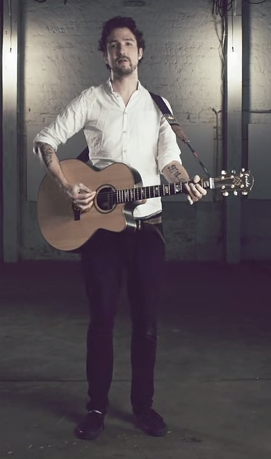
There are also music video which contain a small amount of animation; for example, Frank Turner's Recovery contains some funky animations, but I'll use that video for another style.


Lip-Sync is something that's in most music video (some artists do it live too ;) ) and it's a great way of showing who you are and promoting your image. Lip-Sync shows that it is you singing and what you sound like, it gives you more of a connection to the audience.


Most Adele music videos contain Lip-Syncing so take a look at one of those.


Cutting to the beat is ESSENTIAL in a music video, cutting out of time and/or in weird places can be very jarring and really take someone out of the tone of the video.


The music video for The Black Keys' Gold On The Ceiling has great editing and the Schemes Gag Reel, although not being a music video, still follows that convention and is good at it.


Graffiti6's Stare into the Sun uses fantastic post production effects. Post production effects are used to attract a slightly different audience if the effects are interesting, mesmerising or comples. 


Going back to Frank Turner, split screen music videos are a little bit weird in that filming something 3 times and then having a third of the screen for each recording. But it's cool none the less. In this video, he uses split screen effects and some elements of animation.


This video also happens to use elements of chroma keying.


Camera movements are more common in the narrative music or music videos that use only one shot. The OK Go videos are perfect for this topic as most of their videos are outstanding and use a lot of camera movement, whether it's a drone of a fig-rig.


This video's camera movement is so precise and if it wasn't the videos would not be effective at all. This is also an example of angles and shot types, it's all one shot but the Mise-en-scene is absolutely stunning.


A little bit more about mise-en-scene, it is absolutely crucial in music videos to really get the audience in the correct mindset for the video.


R.E.M's It's The End Of The World, is a very good video that uses mise-en-scene to it's advantage.


The song is obviously about the end of the world and you can clearly see that from the images below.


This is a picture of an abandoned house, quite clearly has been ravaged, and it's fits with the song.


This is a picture of a teenager looking around the house picking up and looking at the items splayed around.


Another picture of the destruction in the house.


The purpose of music videos


Music videos have been around a while, and we've seen them grow in magical ways and forms. We saw the first music video in 1975 and I'm sure Bohemian Rhapsody is a name that rings a bell; the video is considered one of the first to use advanced video effects - Jaws also came out in that year, so I'm not sure if advanced is the word to use.

The earliest example of a music video is in 1941 when a new inventions is discovered and used in bars and clubs; The Panoram Soundie is a nifty little thing that will play short clips of video along with the music.


It wasn't until 1956 when the wave of music-centered films were hitting the big screen, Rock around the clock, Shake, Rattle and Rock and so on. This shows that Music Videos as we know them today became very popular very quickly and they will only get bigger and more popular, allowing for people and companies to make a living off of creating them and also skyrocketing the music industry too.


It all went a little slower until then, we went through several TV shows based on music videos, we saw films that used music to further dramatise the action and people coming together to create music.


Then we hit 1975. The year that shaped and moulded the music industry and then went on to allow directors and artists to use music videos to their advantage. 

Artists would begin using Music Videos to promote their images, how they act, how they look and more importantly their brand. 


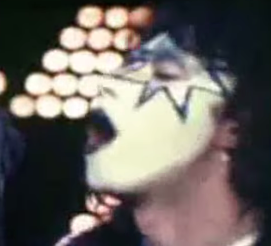
Kiss is a perfect example of a band that really puts their image out there and displays who they are, be it through the way they act and/or dress.

Although kiss don't really have any "Music Videos" they do have live performances of the songs. In the videos, they is a lot of focus on the way they look, the makeup that they have is instantly recognisable and almost anyone can point it out.


This screenshot from the music video above shows how bands use their style and sound to further promote their products. This close-up clearly shows the make-up that one of the band members is wearing, which tells us that this is their style and can be easily found based on that.


Their logo and name are clearly seen in the video also, KISS obviously knows their promotion techniques.


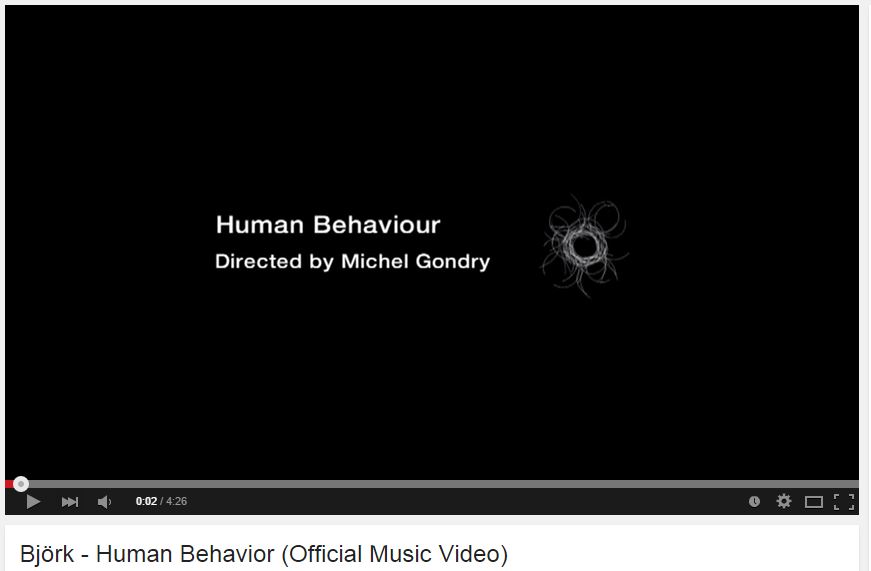
Michel Gondry is a name you might recognise. 


Michel Gondry is known for his wacky techniques in his music video. Everlong by Foo Fighters has a pretty crazy video.


Directors are using the music video industry as a way to promote what they are capable of. Michel Gondry, for example, used music videos as an entry to the directing world and went on to direct a couple of films.

Directors are usually credited at the beginning on music videos via a lower third or a splash title at the start of the video

To further promote and artist or band, producers will often Polish the image of said artist/band and also include some common conventions in their music videos and promotion.

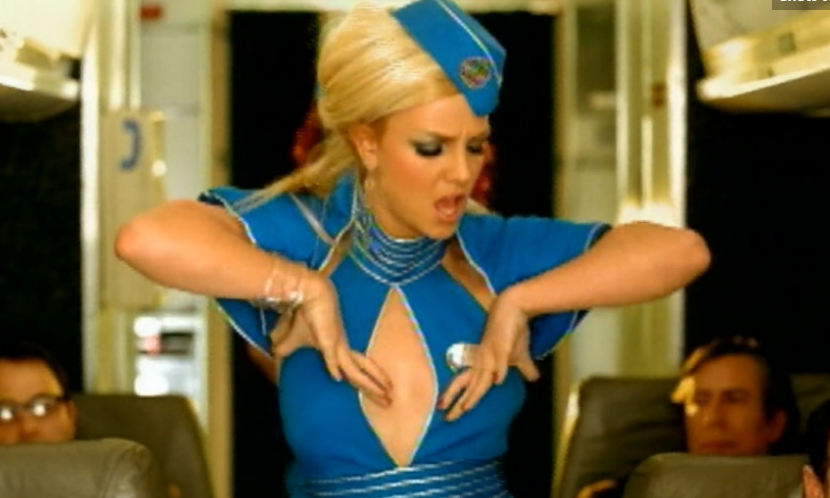
For instance, Popular artists of today will use a lot of sex appeal in their videos in order to gain attention and or popularity. Britney Spears (before she went a bit mental) used sex appeal in her video for Toxic as seen in the screenshot.

A lot of bands that perform live will also use pyrotechnics as a way of show themselves off. Cool effects will always attract attention.

Mainstream artists and their video's are pretty much ubiquitous at this point. You can find mainstream music videos on; Youtube, MTV, MTVhits, VEVO, ITunes and quite a few more. 

I know what you're thinking. "How do independent bands/artists get popular and have kick-ass music videos?" Great question. They also have platforms for those too, free ones! Infact YouTube is a great platform for upcoming artists, believe it or not, Justin Bieber began on YouTube and look where he is now! Kerrang, Artist Websites, VEVO and Social Networks are all free/cheap platforms that creators can put their content on and perhaps get lucky and noticed. 

Seeing as independent artists don't have the cash to splash on a fancy video, they will turn to more classic conventions such as; playing their instruments on video, lip syncing, very cheap and quick effects.


Being on a tight budget also promotes the idea of originality, for instance, OK Go had the idea of doing a one take video and it took them ages and they were running out of time due to budget restrictions. Fortunately they managed to get it done and it kicked their career onwards and upwards.


Let's have a little look at the old pros and cons of being a self produced artist then. 

Not only do you have to put more effort in to get a better result, you will also have to source your own equipment, and find some funding to get yourself off of the ground. You will also have to figure out some sort of location situation and make sure you have the right locations for the music video. And finally distribution can be difficult seeing as you can't mass produce CD's and sell them, you'll have to find a unique way to distribute, or just upload it to YouTube and hope for the best (have fun in 300 hours of content uploaded every MINUTE!) 

That's all the bad stuff out of the way, now the good stuff. You have FULL CREATIVE CONTROL over the project, so it can be perfect providing you put time into it and make it your own, and YouTube is totally free, so distribution is covered. It might be hard, but as long as you keep at it, and working on it, it will get done and be amazing.

Intertextual music videos were a pretty big hit last year. In this style, we have many sub-styles. Synergy is when songs that were used in films will often promote their song more by using footage from the actual film.

Synergy is... "the interaction or cooperation of two or more organizations, substances, or other agents to produce a combined effect greater than the sum of their separate effects."

Basically, Synergy is when say, the team behind 'Despicable Me' teams up with 'Walls' to create a Minion ice cream. Not only does it encourage parents or children to purchase the Ice cream, it will also promote the image of the film and 'Minions'

Let It Go was performed by Idina Menzel and was used in the film Frozen. The music video for this song is all footage from the film and a classic example of synergy.


In conclusion, music videos will continue to grow and make a bit of money for anyone who gets into it!

A little bit more about mise-en-scene, it is absolutely crucial in music videos to really get the audience in the correct mindset for the video.

The song is generally about all the things wrong in the world. It references, Greek and biblical mythology, natural disasters and man-made disasters. 

R.E.M's It's The End Of The World, is a very good video that uses mise-en-scene to it's advantage.


The song is obviously about the end of the world and you can clearly see that from the images below.


This is a picture of an abandoned house, quite clearly has been ravaged, and it's fits with the song.


This is a picture of a teenager looking around the house picking up and looking at the items splayed around.


Another picture of the destruction in the house.